Alison Davison, Paula Dimarco and Carrie Miller pictured at The Heart of The Matter exhibition at Great North Museum yesterday, the exhibition was conceived by artist Sofie Layton and bioengineer Giovanni Biglino, and developed in collaboration with health psychologist Jo Wray.
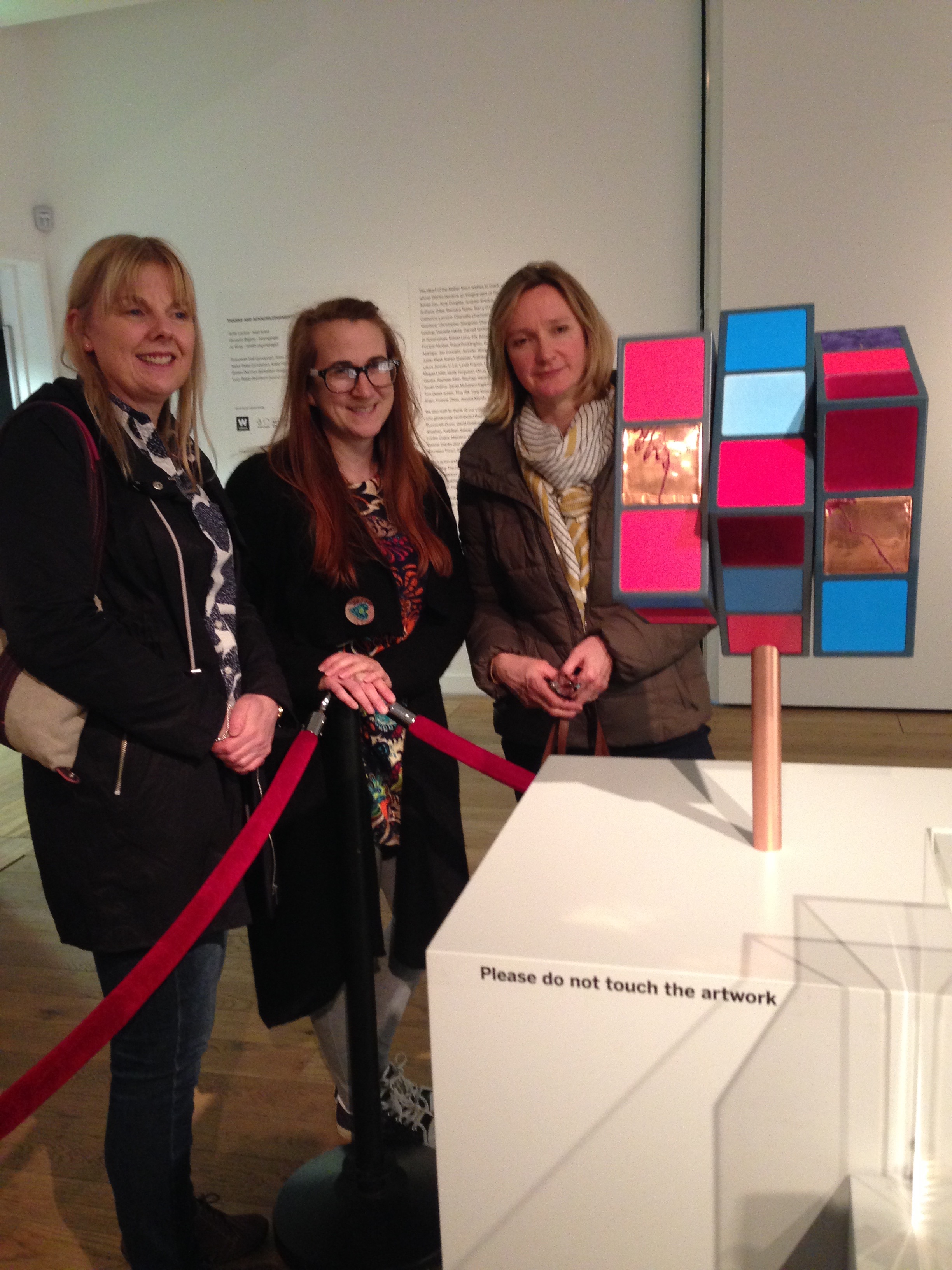
Interesting time today @GNM_Hancock looking at how Art and Medicine interact as part of our @NewcastleHosps and @RGSNewcastle collaboration to showcase the upcoming Therapy Services Project.
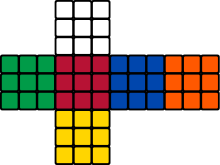
In conversation about the Therapy Services Project with Paula Dimarco, Physiotherapist, Carrie Miller, Business Support Manager, Alison Davison SALT and Artist Teacher Christine Egan-Fowler; we discussed the importance of Sofie Layton’s version of the Rubik’s cube as an idea of how to explain the ways that Therapy Services work together to enable patients to achieve as high a level of functional independence as possible.

The project is an ongoing collaboration with year 12 art and anatomy students from Royal Grammar School, Newcastle and the Therapy Services Team (embracing Physiotherapy, Speech and Language, Diet and Nutrition, Podiatry, Psychology, Occupational Therapy)
The Heart of The Matter exhibition at GNM was conceived by artist Sofie Layton and bioengineer Giovanni Biglino, and developed with health psychologist Jo Wray. The work is produced by Susie Hall (GOSH Arts), Nicky Petto and Anna Ledgard in association with Artsadmin, and is supported by the Wellcome Trust, the Blavatnik Family Foundation, Above&Beyond, Great Ormond Street Hospital Children’s Charity and using public funding by the National Lottery through Arts Council England. With thanks to RapidformRCA and 3D Life Print. There is a lot of collaboration here! It has inspired us!
We are intending to create a series of visual and sensory responses exploring our collaboration with the Therapy Services and Royal Grammar School Art students. We intend to create art works that help to highlight the Therapy Services’ bespoke multi- disciplinary working days and illustrate the team’s involvement in making a real difference to patient outcomes….
We will present photographs of the project, initially in poster form, then, the work will feature in an exhibition at school, accompanied by a student led symposium about the project and in the next few weeks the emergent project will be shown at the upcoming Therapy Services Conference.
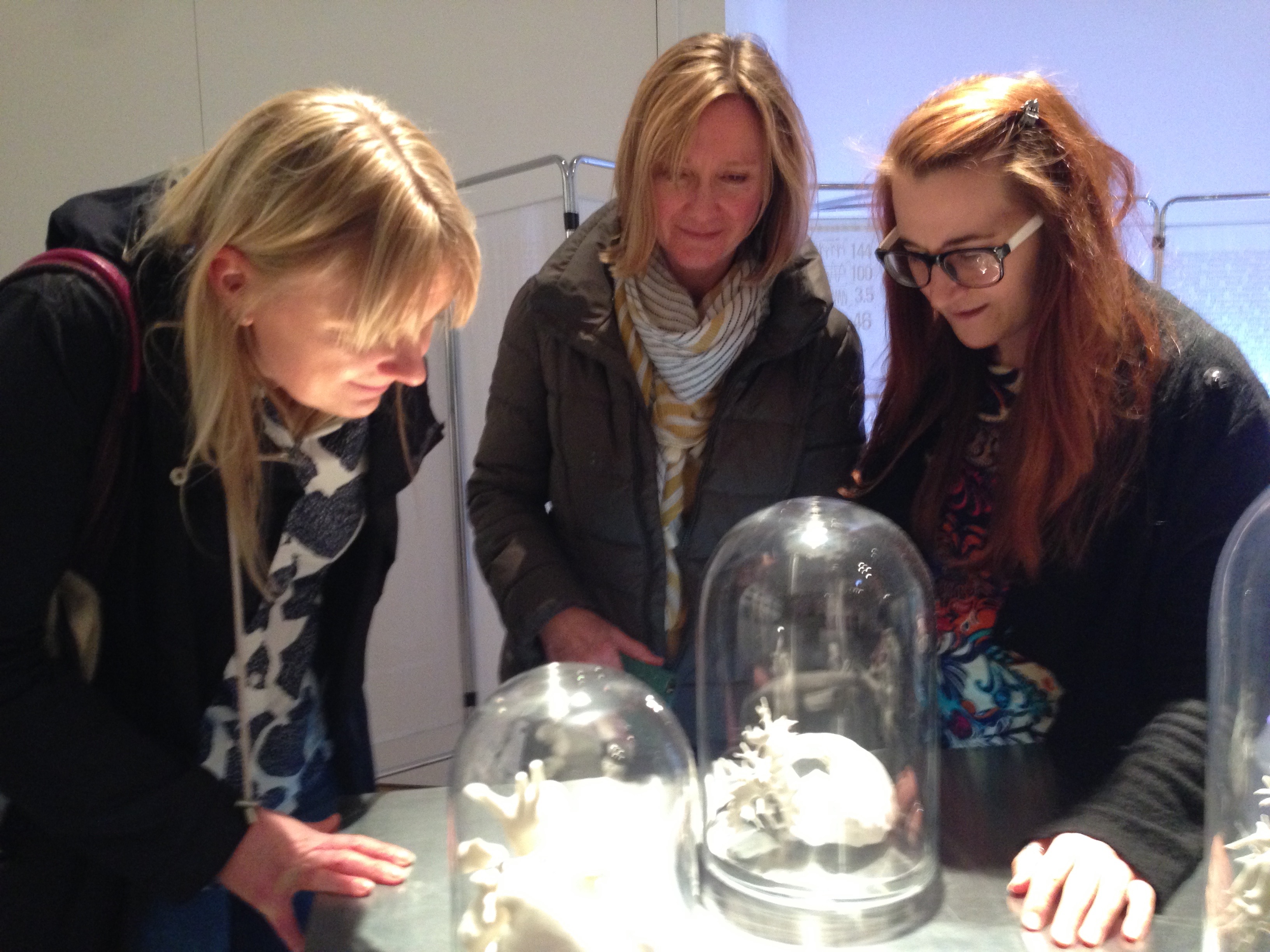
Paula Dimarco (Physiotherapy, right in the photo) and I met through yoga. We talked about some of the activities that I present to my art students about developing an awareness of both sides of their bodies when they draw. She told me about the work she does with patients whose movements are changed through brain injury. We thought that we have a lot to learn from each other.
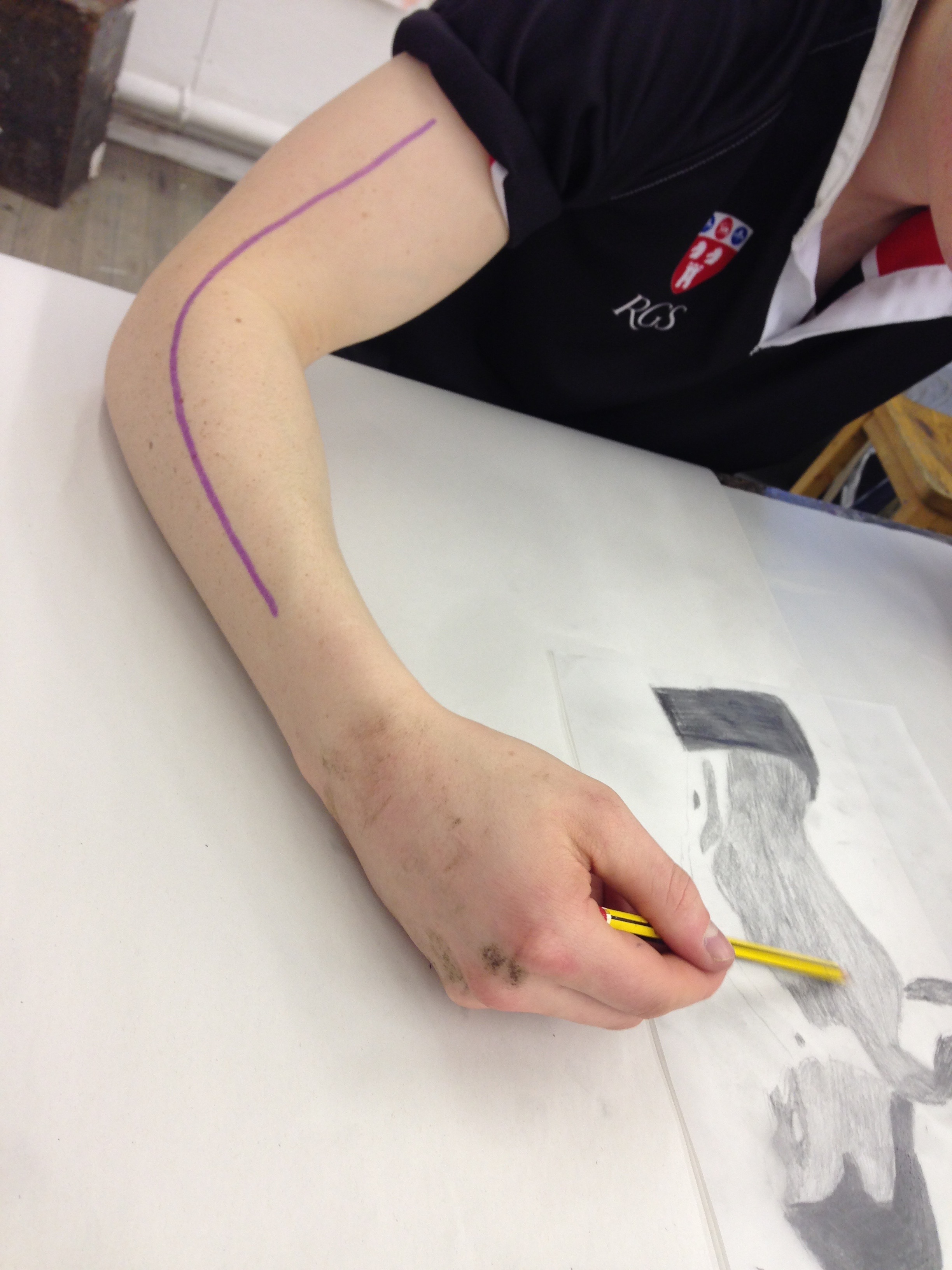
This year 11 RGS art student has drawn a line on his arm to help him ‘map’ the progress of very small movements when creating shading.
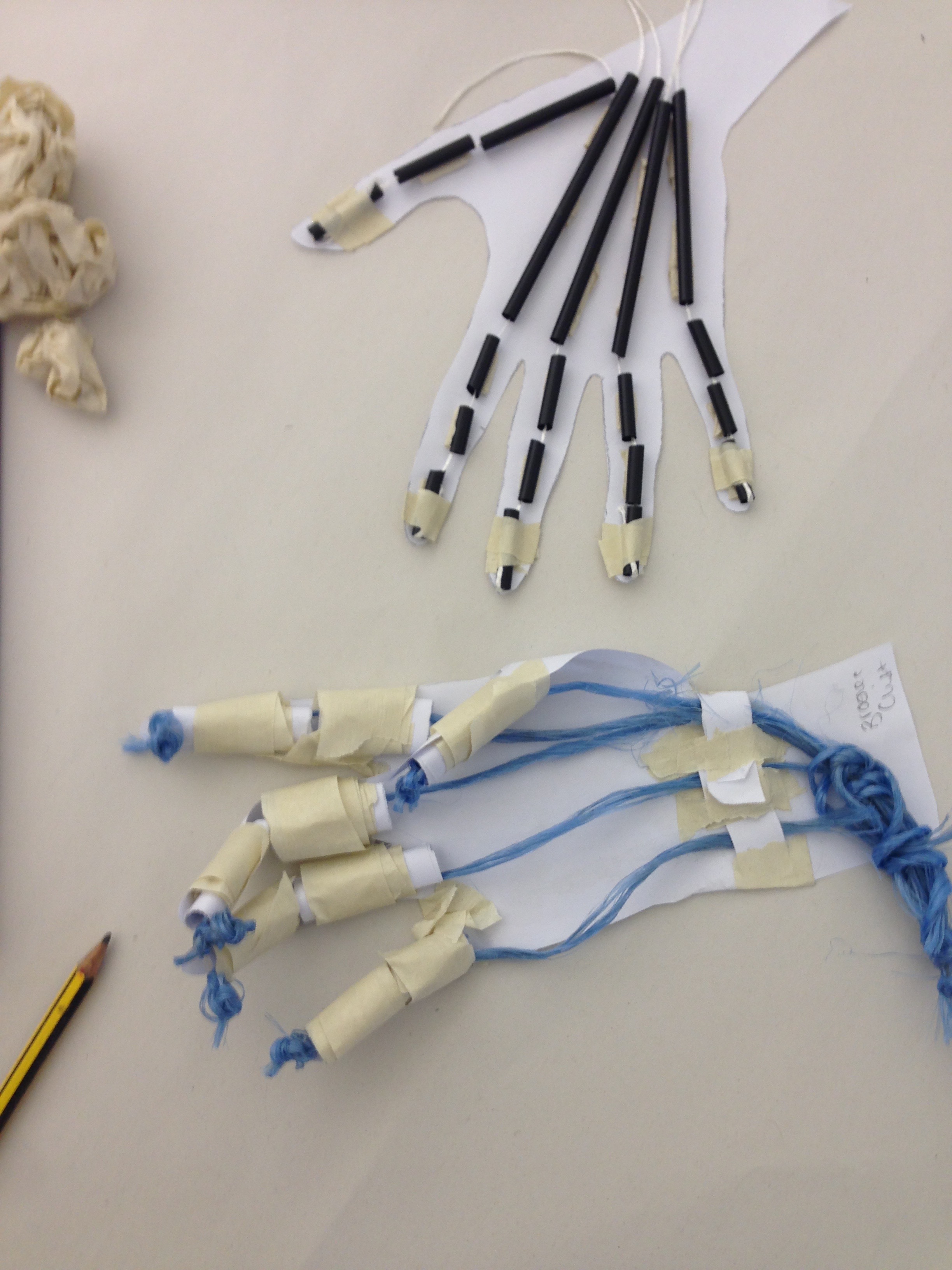
Year 12 Anatomy students have made models exploring the mechanisms that underpin the movements of the hand.
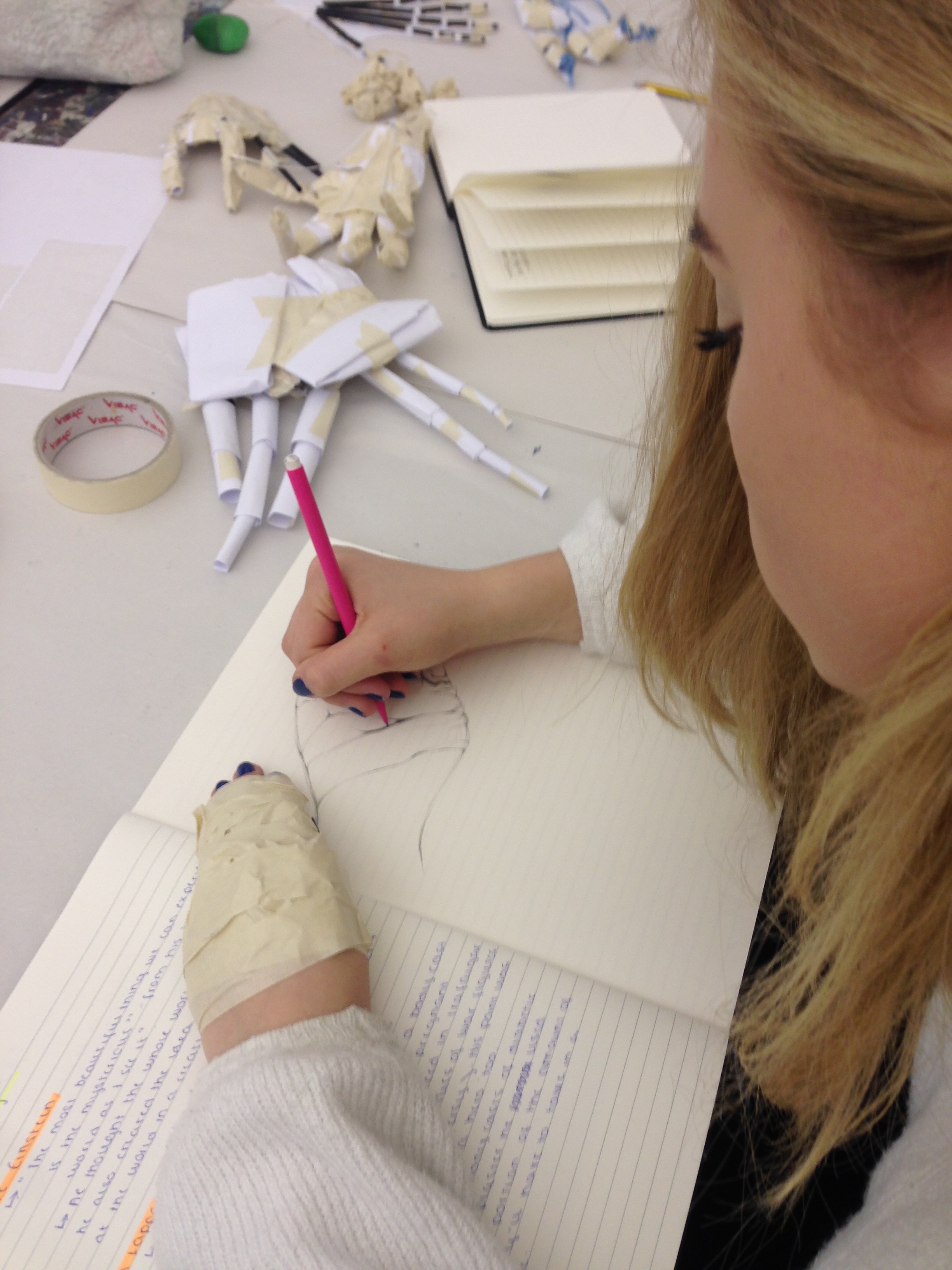
The photo shows a year 12 art/ anatomy student exploring how imposing a temporary restriction to the hand with masking tape can enable investigative awareness of the ‘other hand’ …notes made in the Visual Diary make a personal recording of sensation and change.
In the Therapy Services Project, we are already learning from each other; our Art students are visiting the RVI to experience the clinical working environment and the Therapy Services experts are in turn learning from our young people how to think more creatively about communicating the range of contributions they make during the patient journey ; to the process of empowering patients to enable independent function, as much as possible.
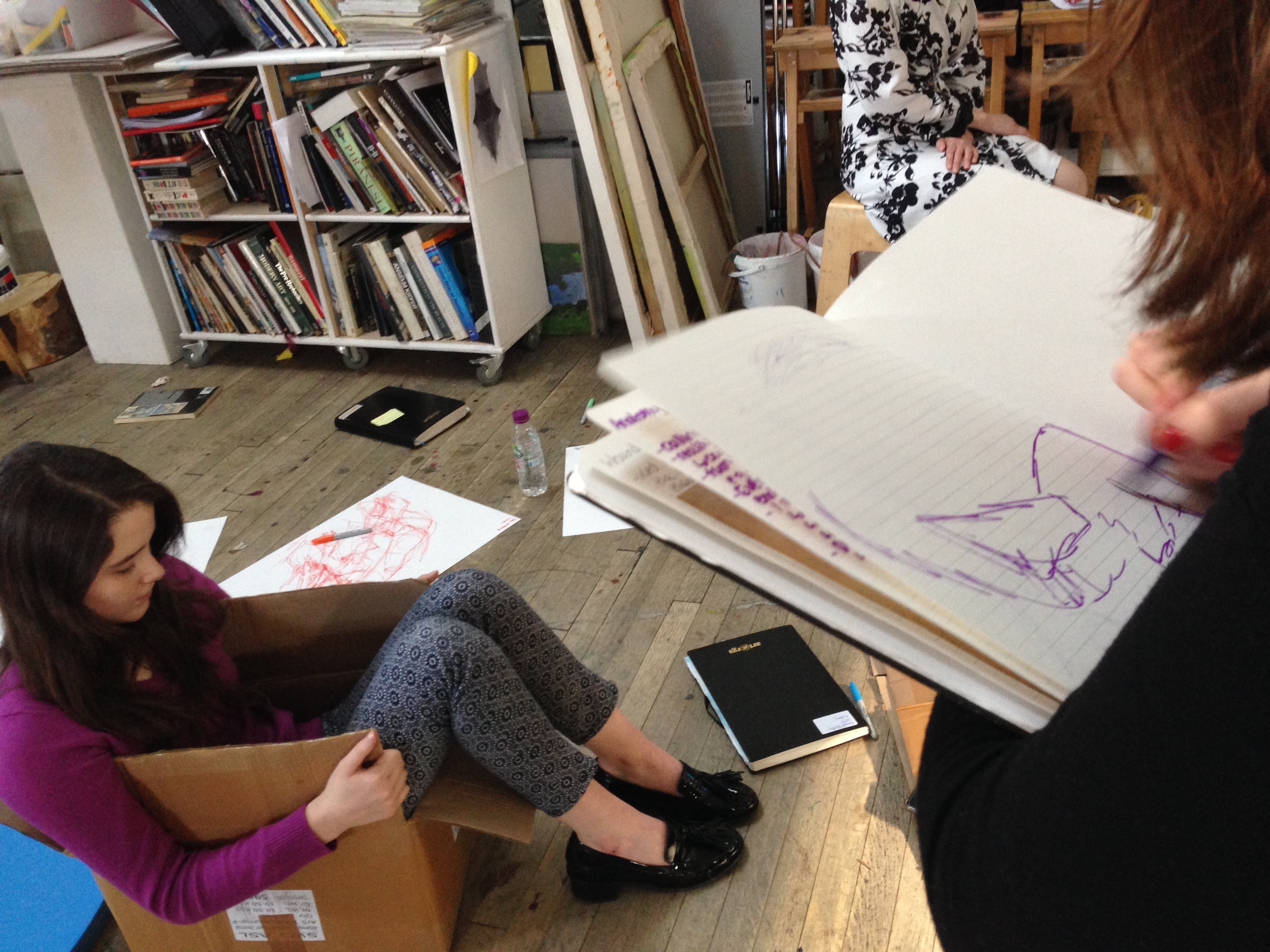
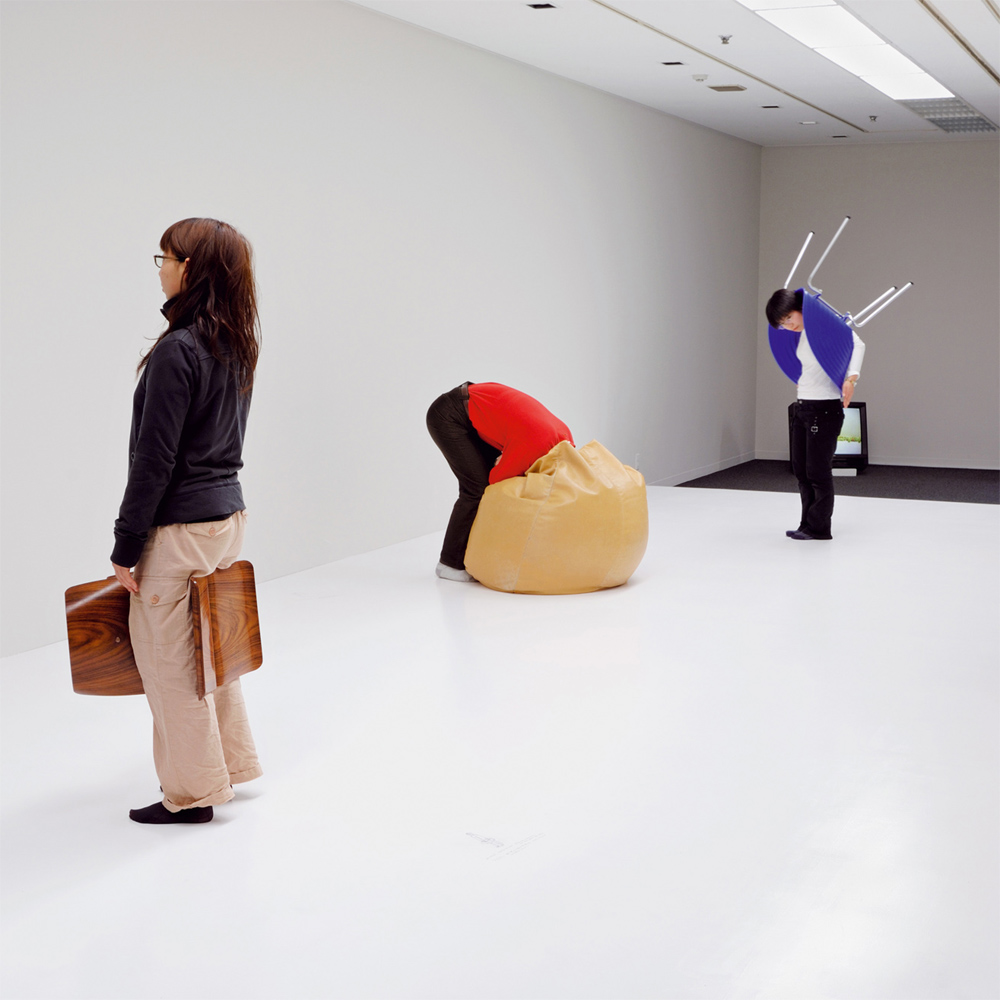
Photo above shows an RGS Anatomy student, an intending vet, creating a restriction for her set of movements. Her efforts to move whilst stuck in a box ( after artist Edwin Wirm’s one minute sculptures, see the photo below for performance at STUK ) are recorded in annotated drawings by another art student.
Our young RGS artists are learning in the project how a team works together, about the range of contributions the Therapy Services Team make during the patient journey. About the incredible bespoke nature of the journey that patients have from admission; benefitting from the range of expertise that enables the team to react so quickly and effectively to patients’ complex needs.
Reflecting on our potential and roles is important for us all and the students have found the interaction between the six therapies fascinating. They are using the project to investigate the connections between their Art ideas; inspired by how the six expert fields work in collaboration. They are meeting representatives of the six expert fields and asking them to present what they do in a day and then the students will re-represent these roles, using their creativity, in a new way.
In this very new project, we have already been challenged to rethink the stereotypes that adults have of young people and our fixed idea of what a named adult job entails or what art is . It has been an eye opener!
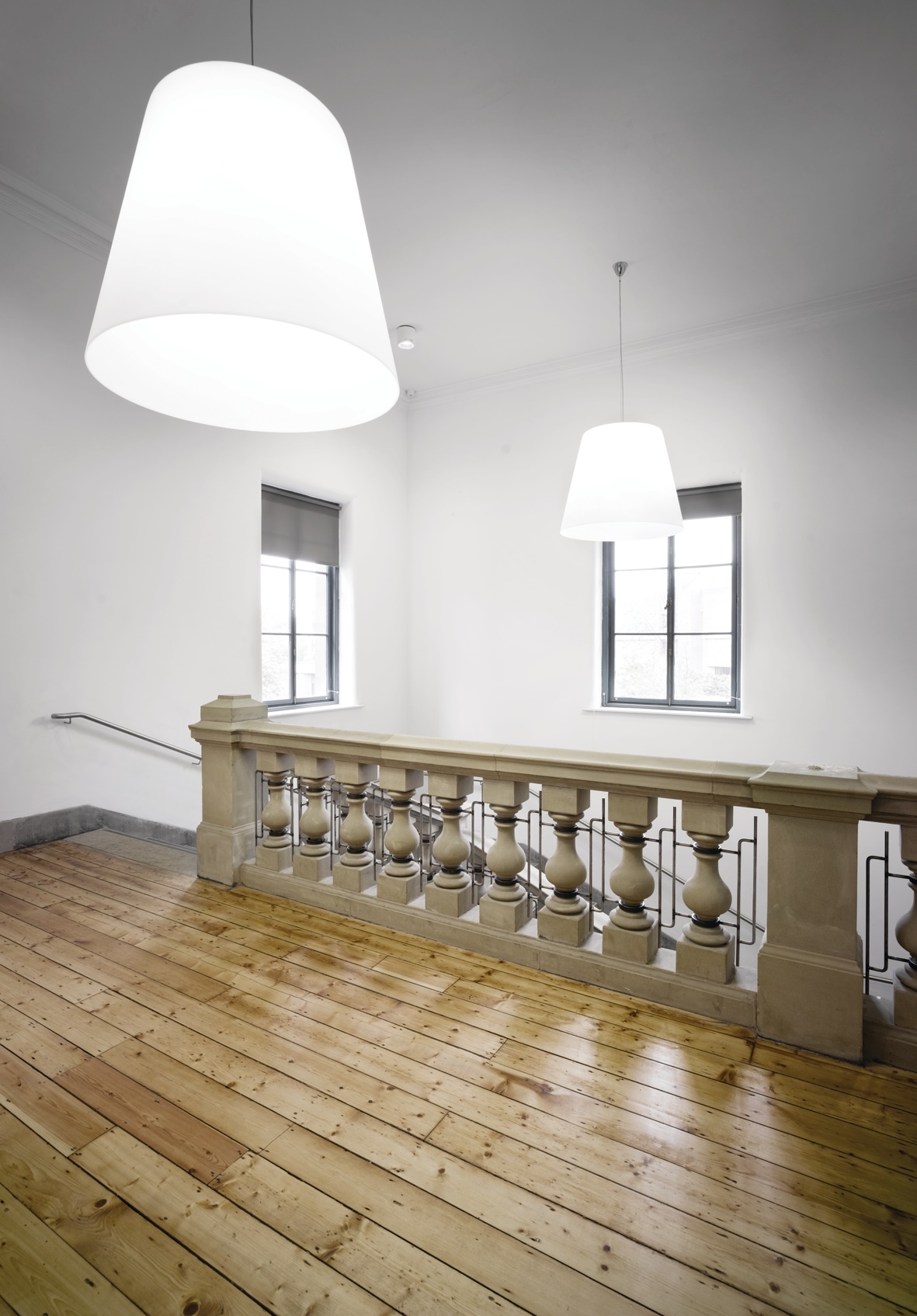
In the lovely, airy, Terry Farell designed first floor cafe at GNM, we had conversations about eye gaze systems and swallowing mechanisms, complex head injury physiotherapy treatment for patients in intensive care; all treatments spoken about with passion, careful, instinctive regard for patient confidentiality and deft enthusiasm for acknowledging the input from other experts. Patients’ treatments are handled in an amazingly creative, visionary and gruellingly practical way, all in the face of what seemed to me, unimaginable trauma …of motorcycle crashes and air ambulance dashes ; expertise called in from the whole team to make the best and most effective outcome for the patient.
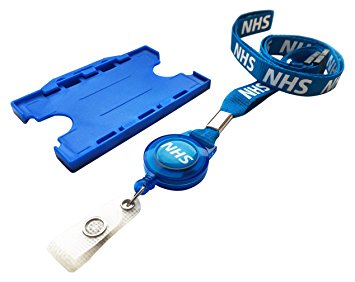

I am reminded of Peter Blake’s Self Portrait ( Tate 1961) as I listen to Alison and Paula’s accounts of the multiple tasks they do in a day; no single role/ job badge can sum up what they do!
In the ‘Heart of the Matter’ Sofie and Giovanni worked together, exploring and reframing what each understands. They worked with patients from Great Ormond Street Hospital for Children in London, the Bristol Heart Institute and the Adult Congenital & Paediatric Heart Unit of Newcastle’s Freeman Hospital and the resulting exhibition is rich in meaning. The recent symposium was very enlightening and provided a chance for questions and in depth presentations about future opportunities to open ways to adapt how we work collaboratively. Conversations in Hall 3 of GNM were about wonder and technology, about creating future collaborations and finding ways of working together.

Artists communicate visually and can show their ideas in powerful ways. This project is a wonderful opportunity to explore how we communicate what we do and how we feel about reflecting on our roles.

The Heart of the Matter is an exhibition that brings together Art and Medicine to reflect on the human heart. The heart can symbolise romantic love and the centre of human emotion, but it is also the engine room of our body and an intricate piece of machinery.
Through artworks inspired by patients with heart conditions, their families and clinicians, the exhibition invites you to discover the extraordinary nature and complexity of this organ.
The Heart of The Matter began with a collaboration between artist Sofie Layton and bioengineer Giovanni Biglino. In 2017, they brought together patients with heart conditions at Great Ormond Street Hospital for Children in London, the Bristol Heart Institute and the Adult Congenital & Paediatric Heart Unit of Newcastle’s Freeman Hospital to look at the heart emotionally and metaphorically in workshops with scientists, artists, students, and nurses.
Conversations and stories from these workshops in turn inspired artworks that offer insight into the heart’s beauty, fragility and resilience, using scientific and artistic methods. Medical 3D printing and topographical maps describe cardiovascular anatomy; digital animation responds to medical imaging; and other abstracted stories are given form in printed textiles, sound installations and sculpture.
Find out more online: www.insidetheheart.org
#heartofthematter
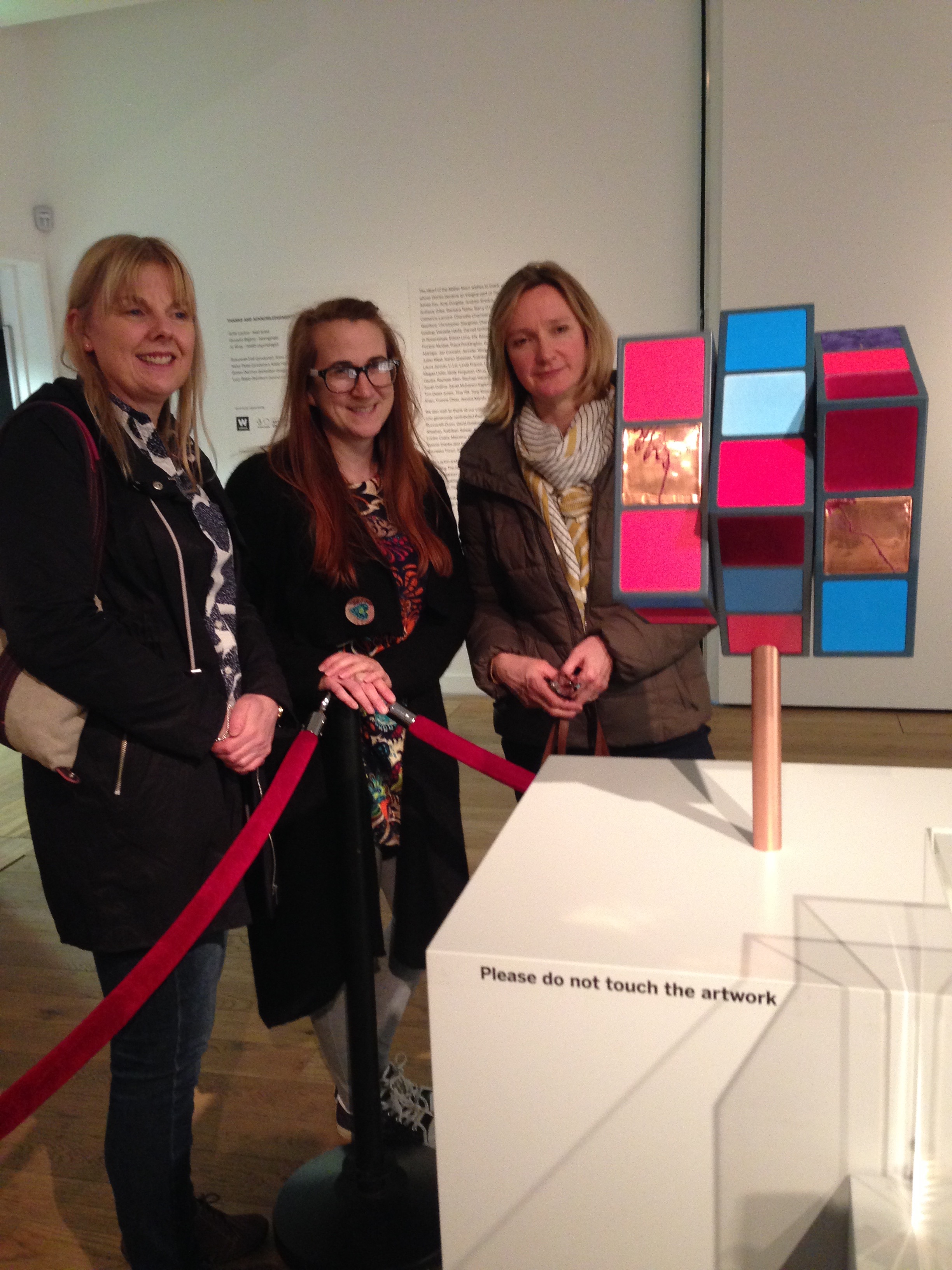
In conversation with Paula Dimarco, Physiotherapist, Carrie Miller, Business Support Manager, Alison Davison, SALT and RGS Artist Teacher, Christine Egan-Fowler; we discussed the importance of Sofie Layton’s version of the Rubik’s cube as an idea of how to explain the ways that Therapy Services work together to enable patients to achieve as high a level of functional independence as possible.
This is an ongoing collaboration with year 12 Art and Anatomy students from Royal Grammar School, Newcastle and the Therapy Services Team.
 artistteachercef